Is Hyperbaric Oxygen Therapy Safe? A Rescue Diver’s Safety Guide
When people first hear about sleeping in a pressurized capsule, their minds often jump to Hollywood movies or deep-sea disasters. The question on everyone’s lips is the same: is hyperbaric oxygen therapy safe? It is a valid question. You are asking to change the atmospheric pressure around your body, a force of nature that usually requires heavy industrial equipment to control. As a Rescue Diver and Paramedic with 23 years of experience, I have spent my career keeping people alive in high-pressure environments. I know exactly what happens when pressure goes wrong, but more importantly, I know exactly how to ensure it goes right.
Recover 3-5x faster from injuries, surgery, and fatigue. Boost oxygen absorption to 16x normal levels. Professional-grade equipment trusted by elite athletes. Expert installation and lifetime support. Transparent pricing with flexible options.
In this guide, I want to dismantle the fear. The reality is that modern soft shell hyperbaric therapy is one of the safest non-invasive treatments available in the UK today. However, “safe” does not mean “foolproof.” There are protocols, physics, and biological rules that must be respected. Whether you are considering renting a chamber for Long Covid or buying one for athletic recovery, you need to understand the difference between the risks of a hospital “hard shell” and the safety profile of a home “soft shell.” We will cover ear equalization, oxygen toxicity, and why the specific equipment we use eliminates the fire risks associated with older technologies. By the end, you will know not just the answer to “is hyperbaric oxygen therapy safe,” but you will understand why it is safer than taking a standard course of antibiotics.
The Physics of Safety: Soft Shell vs Hard Shell
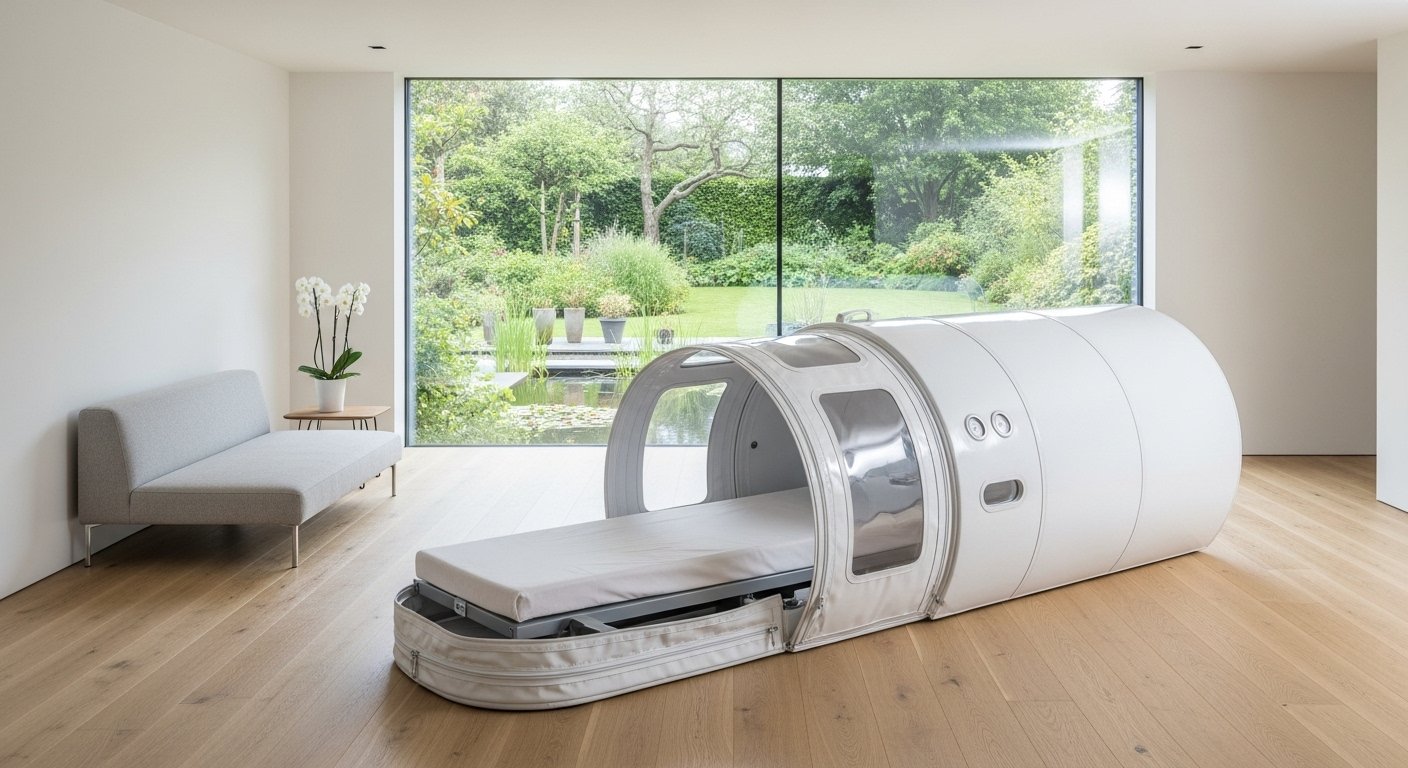
To understand safety, we must first distinguish between the two types of chambers. In a hospital setting, they use “Hard Shell” chambers made of steel or acrylic. These can reach pressures of 3.0 ATA or higher and are often filled with 100% oxygen. In that environment, the risks are significant. Fire is a real danger, and oxygen toxicity is a constant concern requiring a doctor’s presence.
However, for home use in the UK, we use Soft Shell Chambers.
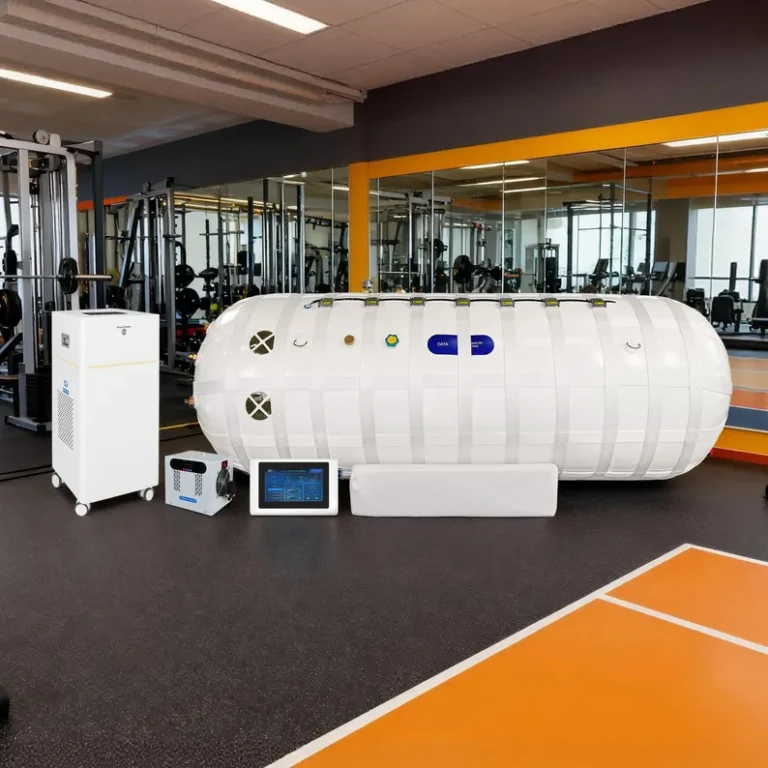
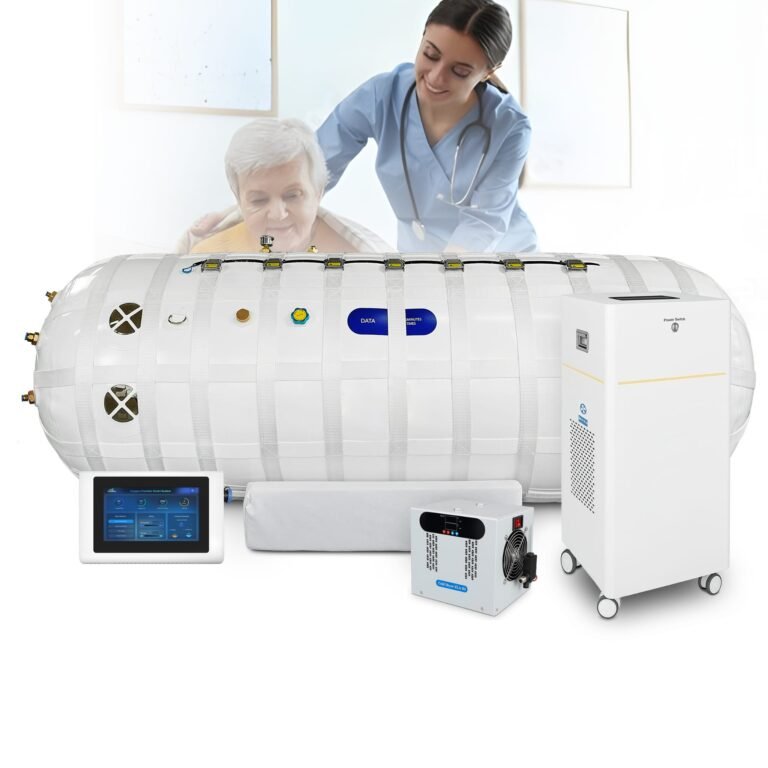
- The Pressure Limit: Our chambers operate at 1.5 ATA or 2.0 ATA. These pressures are physically incapable of crushing you. The valves are calibrated to “dump” excess air automatically. It is physically impossible to over-pressurize a soft shell chamber because the zipper and the material would simply leak air before dangerous pressures could build up. It is a “fail-safe” design.
- The Air Composition: This is the most critical safety feature. Inside our chambers, the environment is compressed air (normal room air), not pure oxygen. You only breathe the 95.6% pure oxygen through a mask.
- Why this matters: Because the chamber is filled with normal air, there is no increased fire risk. You can take your phone, your tablet, or a book inside. The spark risk that exists in hospital chambers simply does not exist here.
Ear Safety: The Number One “Side Effect”
When clients ask “is hyperbaric oxygen therapy safe,” they are usually worried about their lungs or brain. In reality, the only body part that will complain is your ear. The Eustachian tube connects your middle ear to your throat. It is a tiny biological valve. When the pressure increases (during the first 10 minutes of a session), your eardrum gets pushed inward. This feels exactly like landing in an airplane or driving down a steep hill.
Barotrauma (Ear Squeeze)
If you do not equalize (pop) your ears, you can get “Barotrauma.” This ranges from mild pain to, in rare cases, a perforated eardrum. How we make it 100% safe:
- The Diver’s Training: As a Rescue Diver, I do not just sell you a box. I teach you the Valsalva Maneuver (pinching your nose and blowing gently) and the Frenzel Maneuver (using the tongue to push air). These are the same techniques elite divers use.
- Slow-Flow Valves: Our chambers allow you to control the speed of compression. If your ears feel “tight,” you simply turn a knob, and the pressure stops increasing immediately. You are in total control. Unlike a plane, where the pilot decides the descent rate, here you are the pilot.
Oxygen Toxicity: Separating Fact from Fiction
You may have read about “Oxygen Toxicity” (or CNS Toxicity) on Google. This is a condition where too much oxygen causes seizures. It is a real risk for Navy SEALs diving at 50 meters depth. But is it a risk for you in a home chamber?
The Math of Safety: Oxygen toxicity is caused by a combination of extremely high pressure (usually over 2.4 ATA) and long duration.
- Our Chambers: We operate at a maximum of 1.5 ATA or 2.0 ATA.
- The Safety Margin: At these pressures, it is virtually impossible to trigger CNS toxicity using a concentrator. The “Paul Bert Effect” (seizures) generally requires pressures that our soft shell equipment cannot physically generate.
Furthermore, we recommend “Air Breaks.” If you are doing a long session (90 minutes), we suggest taking the oxygen mask off for 5 minutes in the middle. This resets the body’s oxygen clock and makes the safety profile near perfect.
Fire Safety: The “Apollo 1” Fear
Historical tragedies, like the Apollo 1 fire, happened because the capsule was pressurized with 100% pure oxygen. In that environment, even a piece of velcro can explode. I must be very clear: We do NOT pressurize the chamber with oxygen.
- The Mechanism: The compressor fills the chamber with Room Air (21% Oxygen, 79% Nitrogen).
- The Therapy: The Oxygen Concentrator sends oxygen only to your mask / headset.
- The Result: If you take your mask off inside the chamber, the oxygen dilutes instantly into the room air. The ambient oxygen level never rises to dangerous limits. This is why our chambers are safe for home use with electronics, bedding, and clothing.
Contraindications: Who Should NOT Use HBOT?
Part of answering “is hyperbaric oxygen therapy safe” is knowing when to say “No.” As a responsible provider, I will not rent or sell a chamber to you if you have certain conditions. This honesty is your guarantee of safety.
Absolute Contraindications (Do Not Use):
- Untreated Pneumothorax: If you have a collapsed lung (air trapped in the chest cavity), pressure will expand that air and can be fatal. This is the only “hard no.”
- Certain Chemotherapy Drugs: Drugs like Doxorubicin (Adriamycin) or Cisplatin can interact negatively with high oxygen levels. We always require a washout period after chemo.
Relative Contraindications (Ask a Doctor):
- Pregnancy: While Russian doctors use HBOT for pregnancy often, in the UK/EU we generally advise against it unless prescribed by a specialist, simply due to a lack of clinical trials on the fetus.
- Severe Asthma / COPD: If you trap air in your lungs, pressure changes can be an issue. We advise cautious protocols here.
- High Fever: Oxygen can spike a fever. We advise waiting until your temperature is normal.
The Hidden Danger: Cheap Imports and Glue Fumes
If there is one area where I will wave a red flag, it is the flood of cheap, unbranded chambers appearing on eBay and Amazon. Is hyperbaric oxygen therapy safe in these units? No.
- Toxic Outgassing: Cheap chambers use industrial glues to bond the seams. When the chamber heats up (from your body heat), these glues release Volatile Organic Compounds (VOCs). You are essentially nebulizing glue fumes into your lungs while trying to detox. We use Heat-Welded TPU (Thermoplastic Polyurethane), which uses no glue and is medical-grade.
- CO2 Buildup: A human exhales a lot of Carbon Dioxide. If the air compressor is weak (low flow), CO2 builds up inside the capsule. You will get a splitting headache and feel nauseous. Our systems use high-flow 10.8 LPM oxygen delivery and powerful air compressors (120L/min) to flush CO2 out constantly.
- Zipper Failure: The zipper is the only thing stopping the pressure. Cheap zippers can burst. We use Japanese YKK Senko zippers, the gold standard in engineering.
Redundancy: The “Rescue Diver” Standard
In diving, we have a saying: “Two is one, and one is none.” It means you always have a backup. We apply this to our chambers.
- Safety Valve 1: A manual valve you can turn from the inside to dump pressure instantly.
- Safety Valve 2: An automatic over-pressure valve that opens if the pressure exceeds 1.5/2.0 ATA.
- Safety Valve 3: A backup automatic valve in case the first one gets stuck.
This Triple Redundancy means that even if you fall asleep and the compressor keeps running, the chamber simply cannot over-pressurize. It will just hiss gently, maintaining the exact safe pressure.
Conclusion: Safety is a Protocol, Not Just a Product
So, is hyperbaric oxygen therapy safe? When using a high-quality soft shell chamber, adhering to the triple-redundancy safety standards, and following a proper ear-clearing protocol, the answer is an emphatic Yes. It is safer than driving a car. It is safer than taking many prescription painkillers. The risks (mostly ear discomfort) are manageable and temporary. The benefits (cellular repair, energy, cognitive clarity) are profound.
Do not let fear of the unknown stop you from accessing the healing you need. The technology has matured. It is no longer an experiment; it is a refined, safe, medical-grade tool available for your home.
Your Next Step to Safe Healing
Are you still unsure about your ears or your medical history? Let’s have a chat. I offer a free safety consultation. You can tell me your medical history, and I will give you an honest “Green Light” or “Red Light” assessment based on 23 years of paramedic experience.
- Book a Safety Call: Message me on WhatsApp for a quick chat.
- View Safety Certifications: See the CE and ISO ratings of our chambers on our product page.